Fogg Marries Aouda
Around the World in Eighty DaysPhileas Fogg’s marriage to Aouda transforms a bond formed through rescue and responsibility into a chosen partnership. Its decisive turn comes when Fogg, believing the journey has ruined him, offers Aouda what little he has left; she answers not by accepting him as her protector, but by asking to become his wife. Their wedding follows after his fortune is restored, and Jean Passepartout gives the bride away.
A Proposal Made in Apparent Ruin
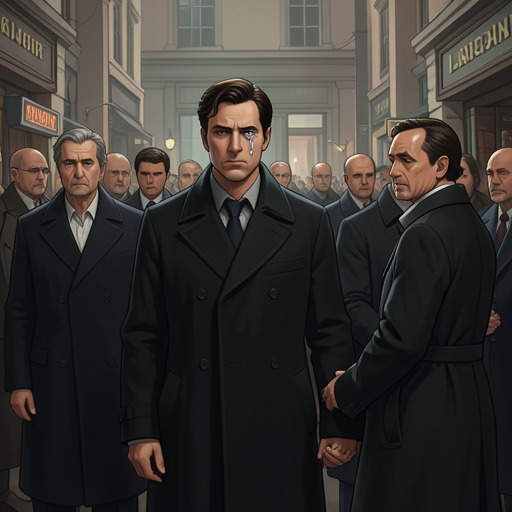
Fogg’s proposal does not begin as a declaration of love. He asks Aouda to forgive him for bringing her to England, then explains that when he decided to take her away from the country where she was unsafe, he had expected to use part of his fortune to secure her a free and happy life. Now, he says, he is ruined. His account makes plain that he has understood her rescue as carrying an obligation beyond immediate safety: he had intended to provide for her future, and still offers the little he has left for her use.
Aouda, in turn, wonders whether she has followed him at the cost of delaying his journey. She recalls that he rescued her from a terrible death and asks whether he also considered himself bound to ensure her comfort in a foreign land. Fogg confirms that this was his intention, while acknowledging that circumstances have turned against him. When she asks what will become of him, he answers that he needs nothing. His restraint leaves the practical question of his future unanswered, but it makes the contrast clear: even in the apparent loss of his fortune, he is still directing his concern toward her welfare.
From Duty to Mutual Commitment
Aouda names the loneliness implicit in Fogg’s answer. Solitude, she says, is sad without someone to whom he can confide his grief, while shared misery may be borne more patiently by two sympathetic people. She then rises, takes his hand, and asks whether he would have her as both kinswoman and friend, and as his wife. The initiative belongs to her. She does not wait for Fogg to convert his sense of duty into a proposal; she offers a relationship in which companionship, rather than financial provision alone, is the answer to his isolation.
Fogg rises too. The narration marks his response as an exception to his usual composure: there is an unaccustomed light in his eyes and a slight tremble in his lips. Aouda’s sincerity, firmness, rectitude, and gentleness first astonish him and then move him. He briefly shuts his eyes, as though avoiding her gaze; when he opens them, he declares that he loves her and is entirely hers. The scene therefore turns on a change from controlled responsibility to openly acknowledged attachment. Aouda presses his hand to her heart, meeting his declaration with a physical gesture of feeling.
A Commitment Tested by Fortune
The proposal takes place while Fogg believes himself financially ruined, so Aouda’s offer cannot be explained as a response to his restored wealth. The circumstances change after he discovers that he has won the wager. Although he has spent nearly nineteen thousand pounds on the way, he has won twenty thousand; he divides the remaining thousand between Jean Passepartout and Fix, against whom he bears no grudge. Even in distributing the balance, he deducts from Jean Passepartout’s share the cost of the gas burned in his room for nineteen hundred and twenty hours, maintaining his characteristic concern for regularity.
That evening, Fogg asks Aouda whether their marriage is still agreeable to her. She points out that he had been ruined and is now rich again, making the reversal explicit. Fogg replies that his fortune belongs to her and credits her suggestion of marriage with the recovery of his position. The exchange renews their consent after the change in circumstances: the proposal was made when he thought he had little to offer, and he now insists that restored wealth is hers to share. His composure has returned, but the question itself acknowledges that the shift in fortune could matter to her decision.
Wedding and Narrative Significance
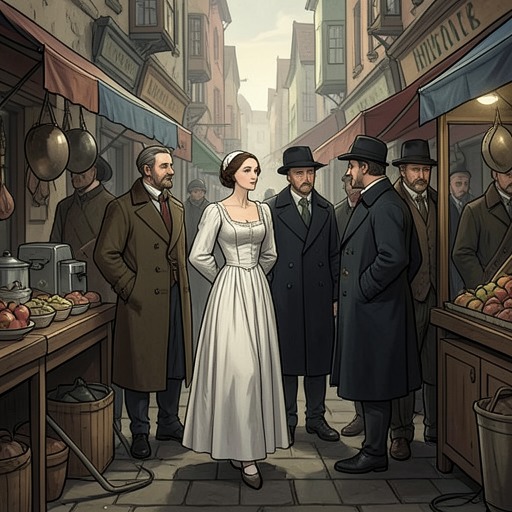
The marriage takes place forty-eight hours later. Jean Passepartout gives the bride away, a role the narration connects to his having saved her. His place in the ceremony carries the earlier rescue into the new household: the journey’s acts of protection are not left behind when the danger has passed, but become part of the personal history surrounding the marriage.
The event also completes a movement from unequal circumstances toward mutual commitment. Fogg first describes Aouda’s safety and future in terms of his responsibility and resources; Aouda answers with companionship offered at the moment those resources seem lost. After the wager restores his fortune, Fogg does not treat the marriage as settled merely by the earlier proposal: he asks again, and she answers in light of the change. The wedding joins these two moments—the offer made in apparent ruin and the renewed agreement after success—while Jean Passepartout’s role recalls the rescue that brought them together.